Every business owner wants to grow. Whether that means opening a second location, upgrading equipment, hiring staff, or launching a new product line, growth requires capital. The challenge is doing it without draining the cash reserves your business depends on.
Strategic small business financing allows you to fund expansion while protecting day-to-day operating cash flow. Instead of risking payroll, inventory, or emergency expenses, the right financing structure helps you grow with confidence and control.
In 2026, business owners have more financing options than ever. The key is choosing the right tool for the right purpose. This guide breaks down how strategic financing works, which funding options make sense for expansion, and how to protect your cash flow while scaling your business.
The Cash Reserve Dilemma
Your cash reserves are your safety net. They cover payroll during slow months, handle unexpected expenses, and give you peace of mind. So when an expansion opportunity arises, it makes sense to hesitate before depleting those reserves.
Many business owners fall into one of two traps. Either they drain their savings to fund growth and leave themselves vulnerable to cash flow gaps, or they pass up opportunities entirely, staying stuck at their current size while competitors move ahead.
There’s a better way.
The Strategic Financing Approach
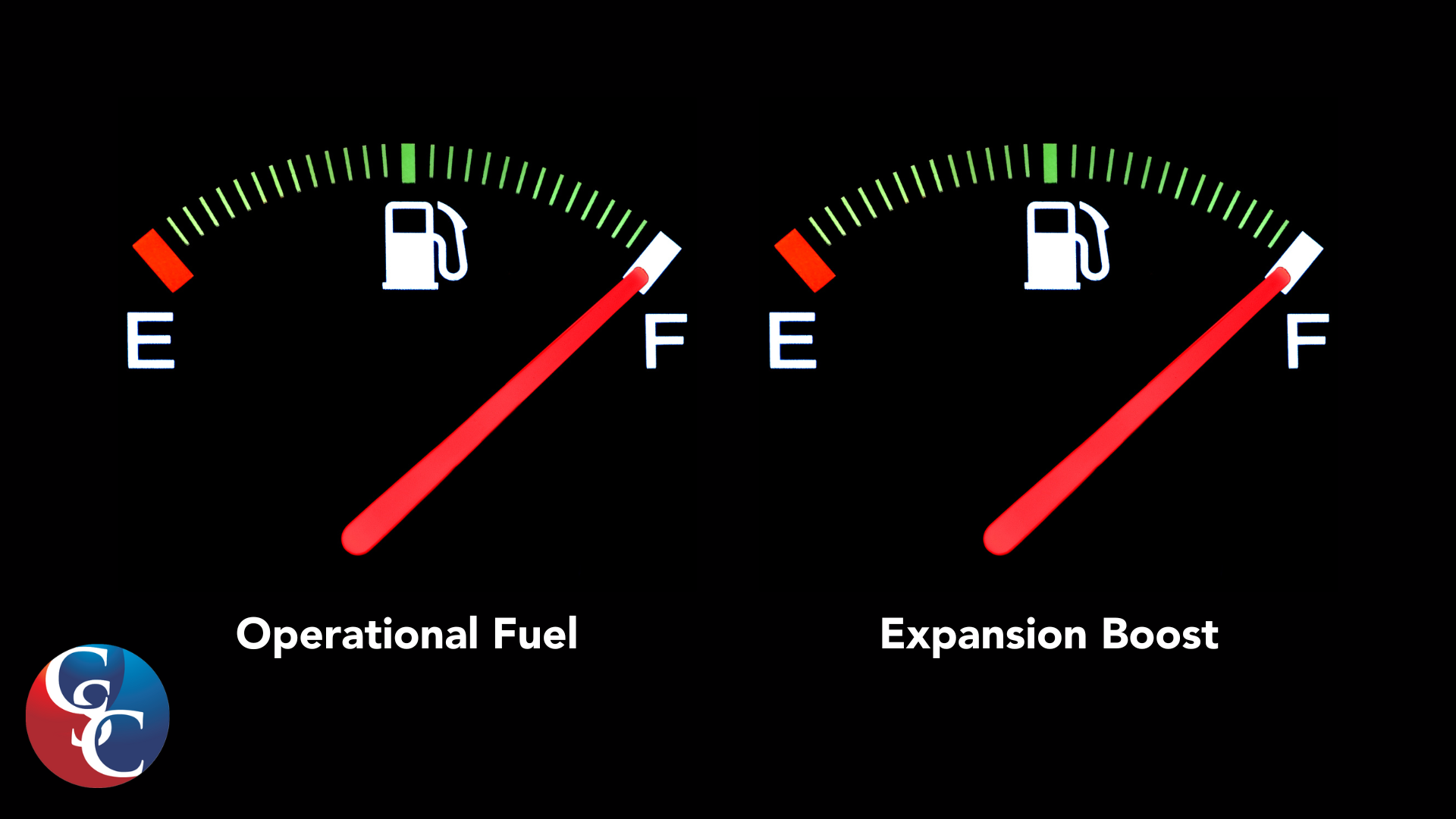
Experienced business owners separate expansion costs from operating capital. Instead of using cash reserves for growth investments, they leverage financing tools designed specifically for business expansion. This approach lets you scale while maintaining the financial cushion your business needs.
Think of it this way: your cash reserves are for running your business day-to-day. Financing is for building and growing it.
Understanding Your Funding Options for 2026
Before diving into specific financing products, it’s worth understanding the full landscape of funding options available for business expansion. Each approach has its own advantages depending on your situation, goals, and how much control you want to maintain.
| Funding Option | Best For | Pros | Cons |
| Self-Funding (Bootstrapping) | Owners with personal savings or family support | Complete control over business decisions; no debt obligations | High personal risk; potential penalties from retirement account withdrawals; limited by personal resources |
| Crowdfunding | Product launches or creative projects | Low risk for business owners; builds customer base early | Requires compelling story and significant marketing effort; uncertain success rate |
| Venture Capital / Angel Investors | High-growth, scalable businesses | Substantial capital for aggressive expansion; strategic guidance | Give up equity and control; investors expect board seats and high returns |
| Small Business Loans & Lines of Credit | Established businesses seeking strategic growth | Retain full ownership; fast access to capital; flexible terms | Requires established revenue and credit history; debt obligation |
For most established businesses looking to expand, traditional financing through loans or lines of credit offers the best balance. You retain full ownership and control while accessing the capital needed to grow. This is where Clear Skies Capital specializes—providing fast, flexible financing solutions tailored to your expansion needs.
Let’s explore the loan and credit options in more detail, as these are typically the most practical choice for business owners planning strategic expansion in 2026.
When a Line of Credit Makes Sense for Growth
A Business Line of Credit is one of the most flexible tools for managing expansion. Unlike a term loan where you receive a lump sum upfront, a line of credit gives you access to funds as you need them—and you only pay interest on what you actually use.
This structure is ideal for expansion scenarios where costs roll out over time. Opening a new location, for example, involves deposits, inventory purchases, initial marketing, and staffing costs that happen in phases. With a line of credit, you can draw funds for each expense as it comes up, rather than borrowing everything at once.
Key advantages for expansion:
- Flexibility: Draw what you need, when you need it, up to your credit limit
- Cost efficiency: Only pay interest on funds you’ve actually drawn
- Revolving access: As you pay down the balance, that credit becomes available again
- No annual fees or non-usage charges: Your credit line is there when opportunity knocks
At Clear Skies Capital, our Business Lines of Credit range from $15,000 to $250,000, with approvals in as fast as 4 hours and funding typically within 1-2 business days.
When a Term Loan Is the Right Choice
For larger, one-time expansion investments, a Business Term Loan often makes more sense. If you’re purchasing equipment, buying out a competitor, or doing a major renovation, a term loan provides the full amount upfront with predictable monthly payments.
Best uses for term loans during expansion:
- Equipment purchases and upgrades
- Real estate investments or significant leasehold improvements
- Buying inventory in bulk for seasonal preparation
- Acquiring another business or location
With loan amounts from $10,000 to $500,000 and terms from 6 months to 5 years, you can match your repayment schedule to your expected return on investment. And with no collateral required and no prepayment penalties, you maintain flexibility even with a structured loan.
Choosing the Right Tool for Your Strategy
Not all growth projects are funded the same way. The key to a successful expansion is matching the structure of your capital to the nature of your project.
If your expansion involves ongoing costs with an uncertain timeline, you need flexibility. If it involves a specific, one-time purchase, you need stability. Use the comparison below to determine which strategic tool aligns with your specific goals for 2026:
| Product | How It Works | Amounts | Best Uses | Payments & Terms |
| Line of Credit | Access funds as needed; pay only for what you draw. | $15K – $250K | Phased projects, staffing, & marketing. | Flexible; revolving credit line. |
| Term Loan | One-time lump sum provided upfront. | $10K – $500K | Equipment, real estate, & acquisitions. | Fixed monthly payments; 6 mo – 5 yrs. |
How These Options Help Your Cash Flow
By selecting the right product from the table above, you ensure that your debt service matches your revenue growth. For example, a line of credit prevents you from paying interest on “sitting cash,” while a term loan locks in a payment that won’t fluctuate as you scale.

Real-World Expansion Scenarios
Let’s look at how strategic financing works in practice with two different expansion scenarios.
Scenario 1: Opening a Second Location
Imagine you run a successful retail business and want to open a second location. Your cash reserves are $75,000—enough to keep your current store operating smoothly for several months.
- Without strategic financing: You’d spend $50,000 on the new location (first month’s rent, security deposit, initial inventory, and setup costs), leaving only $25,000 in reserves. One slow period or unexpected expense puts you at risk.
- With strategic financing: You secure a $100,000 Business Line of Credit. You draw $50,000 for the new location while keeping your entire $75,000 cash reserve intact. Your original location stays protected, and you have $50,000 in remaining credit for additional needs as the new store ramps up.
Scenario 2: Equipment Upgrade for Capacity Growth
Now consider a manufacturing business that’s consistently hitting capacity limits. You need to purchase new equipment costing $150,000 to meet growing customer demand. Your cash reserves total $100,000.
- Without strategic financing: You drain your entire cash reserve and still need to find an additional $50,000. Your business is left with zero safety net while trying to integrate new equipment and increase production.
- With strategic financing: You secure a $150,000 Business Term Loan with a 3-year repayment term. Your equipment is paid for in full, your $100,000 cash reserve remains untouched for operations, and your monthly loan payments are easily covered by the additional revenue from increased capacity. You’ve scaled production without creating financial vulnerability.
The key is maintaining your operating reserves—typically 3-6 months of expenses—separate from expansion funding. Match your financing type to your timeline: lines of credit for ongoing expenses, term loans for one-time investments. And always plan for how the expansion will generate revenue to cover payments, even if growth takes longer than expected.
How Clear Skies Capital Supports Your Growth
At Clear Skies Capital, we specialize in helping businesses like yours grow strategically. Since 2014, we’ve funded over 10,000 businesses with more than $500 million in financing, maintaining a 98% approval rate for qualified applicants.
What sets us apart:
- Fast approvals: Pre-approval in as fast as 4 hours, with funding typically within 1-2 business days
- No collateral required: Your business revenue and credit qualify you
- No out-of-pocket fees: Any applicable fees are included in your payment structure
- Flexible options: From $10,000 to $500,000, we have solutions that fit your specific expansion needs
- Real support: Work with a dedicated funding advisor who understands your business and goals
Our minimum requirements:
- At least 1 year in business
- $20,000+ in monthly revenue
- 625+ personal credit score
- Active business checking account
Take the Next Step
Growth opportunities don’t wait, and neither should you. Whether you’re ready to open that second location, upgrade your equipment, hire new team members, or expand your inventory, the right financing can make it happen without risking your financial stability.
Ready to explore your options?
- Call us: (800) 230-9822
- Apply online: Get a decision in as fast as 4 hours at clearskiescapital.com/apply
- Email us: info@clearskiescapital.com
Our team is here to help you find the financing solution that fits your expansion goals and protects your business at the same time.
Let’s talk about making your growth plans a reality in 2026.